
 Lightbox Stands
 Non-Illuminated Stands
 Foldable Stands
 Fabric Tube Stands
 Banner Stands
 Counters
 Accessories
 Browse All Products
 Lightbox Fabric
 Non-Illuminated Fabric
 Foldable Fabric
 Stretch and Slip-On Fabric
 Blockout Fabrics
 Tablecloths
 Lumi
Lumi Trax
Trax Expolinc
 Vista
Vista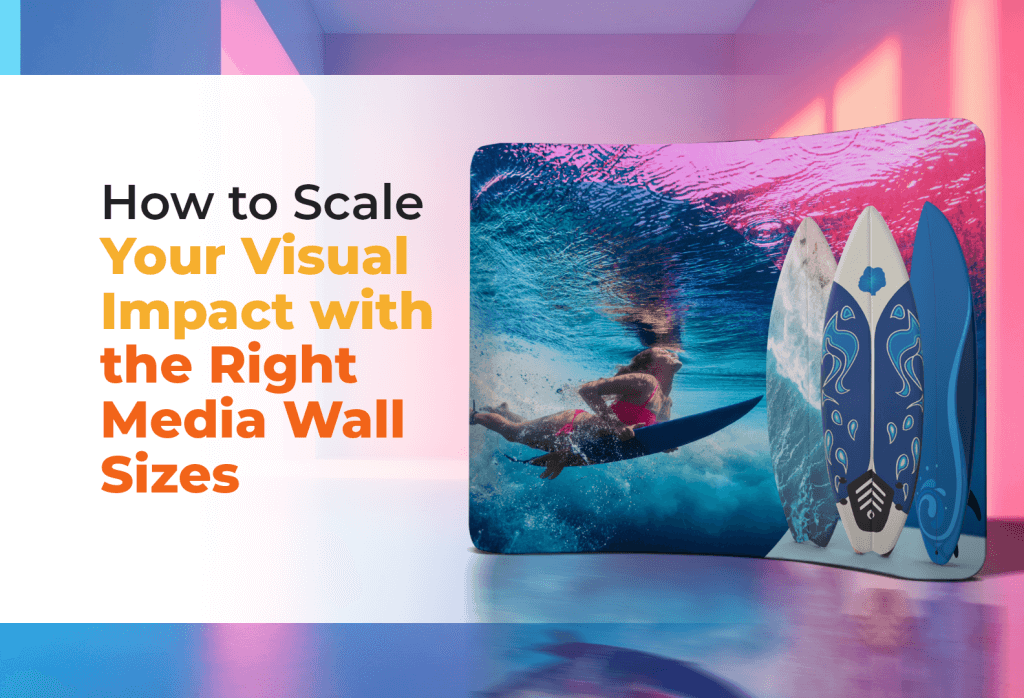
In the chaos of event prep, every detail matters. Set-up windows are tight, attendees have short attention spans, and the clock starts when you roll in. You don’t get a second chance to grab attention. That’s why the right media wall sizes aren’t just nice—they’re the foundation of a visual setup that performs under pressure.
If you’re managing event display logistics, coordinating trade show displays, or trying to make a splash at convention booths, finding the right fit for your media wall is more than a backdrop decision. It’s a brand choice, a layout strategy, and a silent spokesperson rolled into one. This guide walks through how to scale your visual impact by choosing the right media wall size for your space, message, and team.
Start with Function: What Is Your Media Wall Meant to Do?

Before you start measuring dimensions or browsing frame options, focus on the role your media wall needs to play. Is it the star of the booth? A subtle branded backdrop for photos? A divider between zones? The purpose informs everything else—size, layout, placement, even materials.
If your media wall is there to catch eyes from across the floor, you’ll need a wide, elevated format. But if you’re setting up a meeting zone or photo op, you’ll want something that frames people at standing height and looks great in snapshots. Presentation areas benefit from clear messaging and a clean background that supports speakers without visual clutter.
Think through the viewer’s distance. A high-traffic corridor might need a bold, minimal design that reads from 10 meters away. On the other hand, product demos or consultations call for closer engagement, where details and texture matter more.
Map its role to your booth layout. Where do people enter? Where do you want them to stop? A strategically sized wall can guide movement and shape experience.
Common Media Wall Sizes and Where They Shine
Not all media walls are created equal. Understanding the most common media wall sizes and how they align with real-world scenarios makes planning easier—and helps you avoid wasting space or money.
3×2 and 3×3 Media Walls
Compact and portable, these walls are a practical choice for tight spaces and mobile activations. They work well in 3×3 booth configurations or as part of a satellite display, and they also serve as branding stations or step-and-repeat logo backdrops in shop window displays.
A strong example is the Vista Media Wall Tube range, a premium 3×2 display system designed for quick assembly, durability, and a polished finish. Available in straight and curved variants, both three metres wide, the system suits exhibitions, retail activations, events, and branded backdrops.
The frame is constructed from high-quality aluminium tubing, with a bungee cord to keep the tubes connected and a push-button locking mechanism to secure the structure. Graphics are printed on seamless tension fabric using dye-sublimation, creating a smooth and vibrant surface.
Lightweight at around 10–12 kilograms including the bag and graphics, the wall sets up in 10 to 15 minutes without tools. Its manageable size and impressive features make it easy to position in compact areas while providing a strong visual presence.
4×3 and 4×4 Media Walls
These strike a balance between footprint and visibility. If you’re working with a standard 3m x 3m booth, these sizes provide enough height and width for your design to breathe. They’re ideal for startup zones, local expos, or mid-size booths where clarity and presence matter.
Large-Scale Walls (6m and above)
Think of main stages, headline sponsors, or feature walls in exhibition displays. These sizes dominate attention but need thoughtful handling. Without proper design, they can overwhelm or look sparse. Use larger walls to anchor an entire floor section or define your presence at large convention booths.
Not sure what size you’re looking at? A quick mental check: a 3×3 meter wall usually frames 2-3 people comfortably for photos, while a 6-meter spread is closer to what you’d see behind a fashion runway or press briefing.
For a breakdown of available media wall sizes, explore this selection of options: media wall sizes.
Use Scale to Guide Attention, Not Just Fill Space
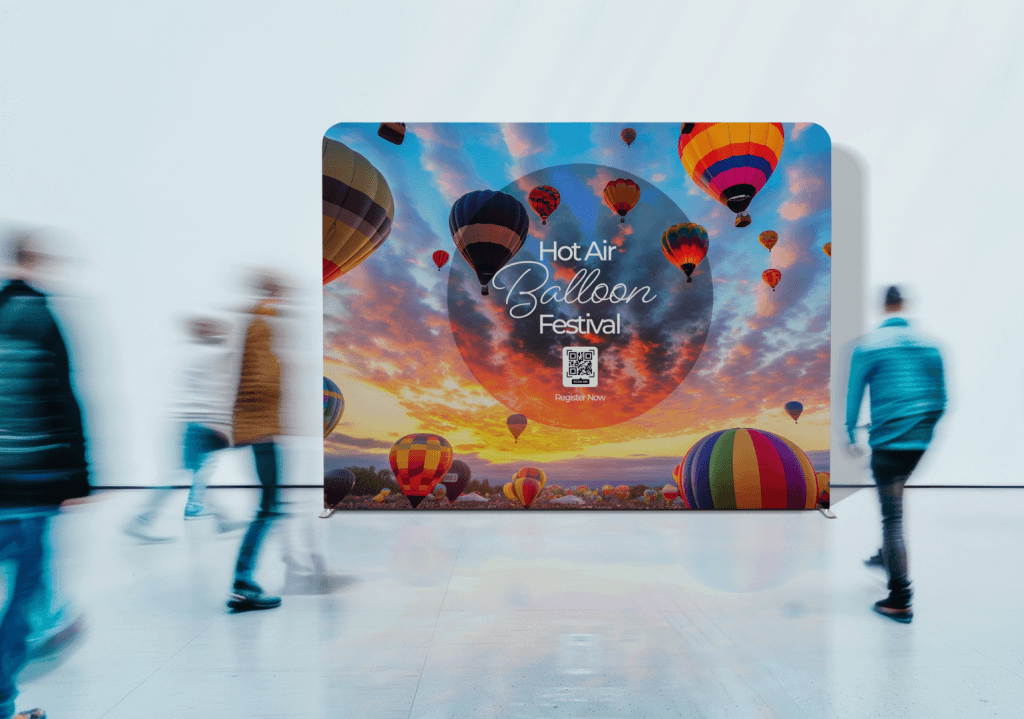
Size plays a role, but it’s not the whole story. A larger display doesn’t guarantee impact—it’s the proportion between space, content, and flow that counts. You want a media wall frame that gives your visuals enough breathing room to stand out, without creating stretches of blank space or forcing awkward layout compromises.
Smart design relies on scale to guide the eye. Your logo should lead, followed by any tagline or core messaging. Background textures or supporting elements should stay just that—supporting. If something feels like too much, it probably is. In most cases, restraint communicates more clearly than a wall packed with distractions.
Proper spacing and text size are just the start. Sharp image resolution ensures every element looks clean and professional, especially under venue lighting or camera flashes. And the frame itself matters—sturdy hardware with a simple locking mechanism can mean the difference between a smooth setup and a last-minute scramble. The best displays don’t just look good—they work under pressure.
Combine Multiple Walls for Flexible, Scalable Layouts
You don’t have to commit to a single wall. Combining multiple media walls opens the door to modular configurations that adapt to your space, message, and audience flow.
Pairing two 3×3 walls, for example, allows you to create an L-shape that defines a corner booth or separates engagement areas. Add a curved unit or stagger panels for depth and motion—great for attracting foot traffic and leading people naturally into your booth.
Many systems use SEG fabric (Silicone Edge Graphics) that aligns across frames without visual breaks. This makes it easy to stretch a design across several panels while maintaining cohesion. It also means you can update sections independently, which is handy for campaigns or rotating promotions.
Match Size to Logistics and Setup Crew
A spectacular media wall that needs six people and a truck to move is not doing you any favours if you’re working with a small team or a tight schedule.
Consider your build time, the size of your crew, and your access window. Large-format walls might have a big visual payoff, but they usually require more hardware, more setup steps, and more logistical planning.
Look for easy-assembly systems like pop-up frames or tension fabric displays for fast setups. These are ideal for event display stands where speed and agility matter. Many modern solutions come in compact bags and require no tools—letting one or two people handle assembly without breaking a sweat.
Tie Media Wall Size to Overall Branding Strategy
Your media wall doesn’t exist in isolation. It should sync with your broader trade show displays, from pop up counters to hanging signage. A mismatch in scale can make your setup feel disjointed.
Pay attention to how your visuals translate across sizes. A design that works beautifully on a 6-meter-wide backdrop might look cramped or lose detail when shrunk to half that size. Adapt your graphics to each format rather than just scaling down the same file.
If you’re working with multiple booths or events, plan for modularity. A consistent look builds recognition, even if the wall size shifts. Think of your media wall as the anchor of your event display, not just a piece of décor. Consider pairing your wall with stands and accessories that match the tone and scale for cohesive exhibition displays.
Final Thoughts
A media wall is a decision that shapes how your brand shows up, interacts, and performs under pressure. The best media wall sizes don’t just fill space; they create impact, support interaction, and make your booth easier to navigate.
Right-sizing your media wall means understanding your venue, message, setup crew, and audience. It means thinking beyond dimensions and focusing on experience. The right fence helps you stand taller, speak clearly, and stay flexible—whether you’re launching a product or owning the floor at a major industry show.
We won’t keep you waiting long. The Media Wall Tube officially launches for pre-order on 15 September, allowing you to lock in yours well ahead of the first events rolling in. Mark your calendars and be ready to reserve one early!
